An operating business with enterprise-grade complexity.
A multi-tenant studio location occupies an unusual operational position. It looks like an operating business — under Fifty-Seven hundred square feet, co-owners. It functions like an enterprise — thirty-plus independent operators each running their own businesses inside the building, each with their own clients, their own schedules, their own compliance requirements, their own communications. The owners of the location isn't running thirty businesses; they're running the operating system that lets thirty businesses run themselves.
When the owners opened this Massachusetts location in 2025, the operating foundation was already in place: a CRM tracking leads, online lead capture from the website, scheduling and digital signatures handled in software. The systems existed. What didn't exist was the connective tissue between them — the place where data from thirty Pros' worth of activity could be seen as one operating picture, where a missed touchpoint in one tool could trigger an action in another, where the owner could understand what was happening across the business without manually checking five places. The model worked, but it had a ceiling, and that ceiling was integration, not capability..
Owners-as-bottleneck — at scale.
In the conventional model, growth has a ceiling — and that ceiling is the owners. Calls go through the owners. Pro onboarding routes through the owners. Compliance reminders, maintenance requests, scheduling — all surface in the owners' inbox. The owner-operator role exists for a reason: at thirty Pros, the difference between a location that retains and a location that leaks is the owners' attention to each Pro's experience. But attention compounds linearly with headcount, and hours don't. By thirty Pros without integration, the model forces a choice the owners shouldn't have to make: be present for everything, or accept that something falls through the cracks.
The structural opportunity is clear: a multi-tenant model like IMAGE Studios runs on multiple businesses operating under one roof — thirty Pros, each running their own salon suite — and the operating cadence has to support all of them in concert. Off-the-shelf CRMs, property management tools, and communication platforms each solve part of the picture. The integration layer between them — the place where data from thirty independent businesses becomes one operating view for the owners — is where the real leverage lives. That layer was the build.
Two AI agents, one operating system.
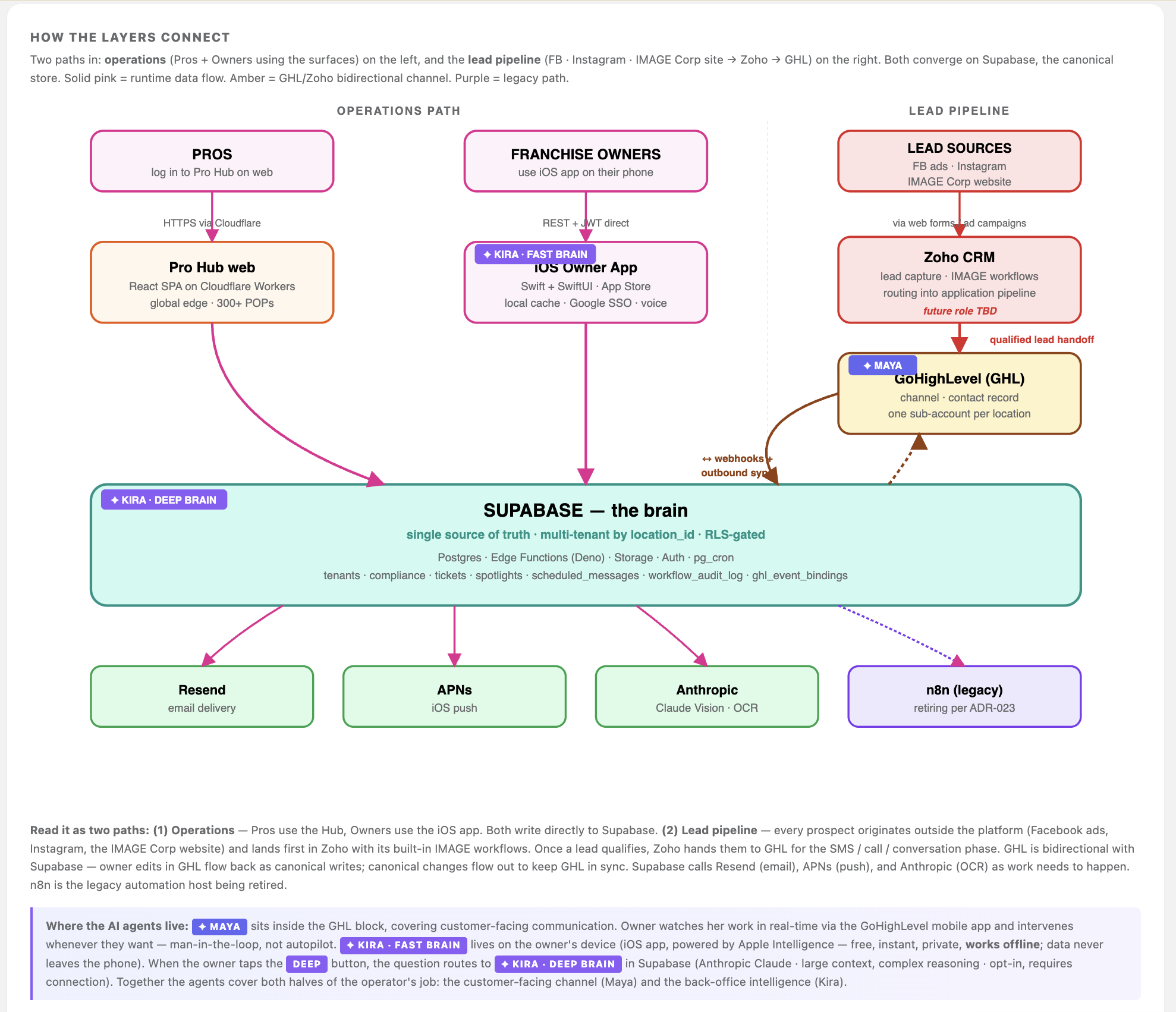
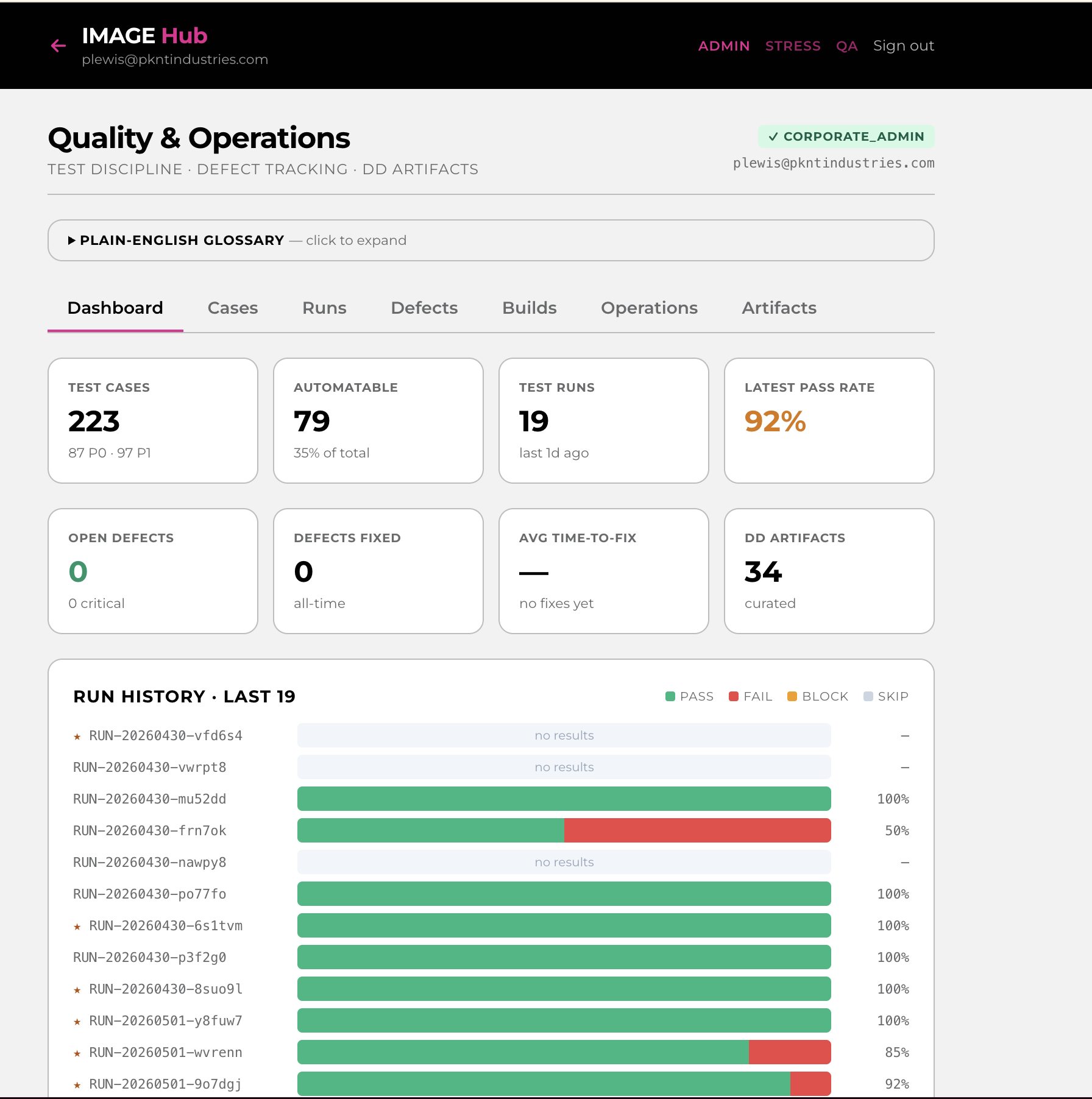
The deployment installed an integrated operating system across the location's customer-facing and operator-facing surfaces. The architecture has two AI agents running on Anthropic Claude — one customer-facing, one operator-facing — sitting on top of the core Cadence stack.
The customer-facing agent handles inbound inquiries from the website and social. A prospective Pro arrives at the location's website, indicates interest in a studio, and engages with the agent. The agent answers questions about the space, qualifies the prospect against the location's tenant criteria, schedules tours directly into the calendar, and routes the lead into the CRM with full context. The agent runs 24/7 and handles the entire intake flow without owner involvement.
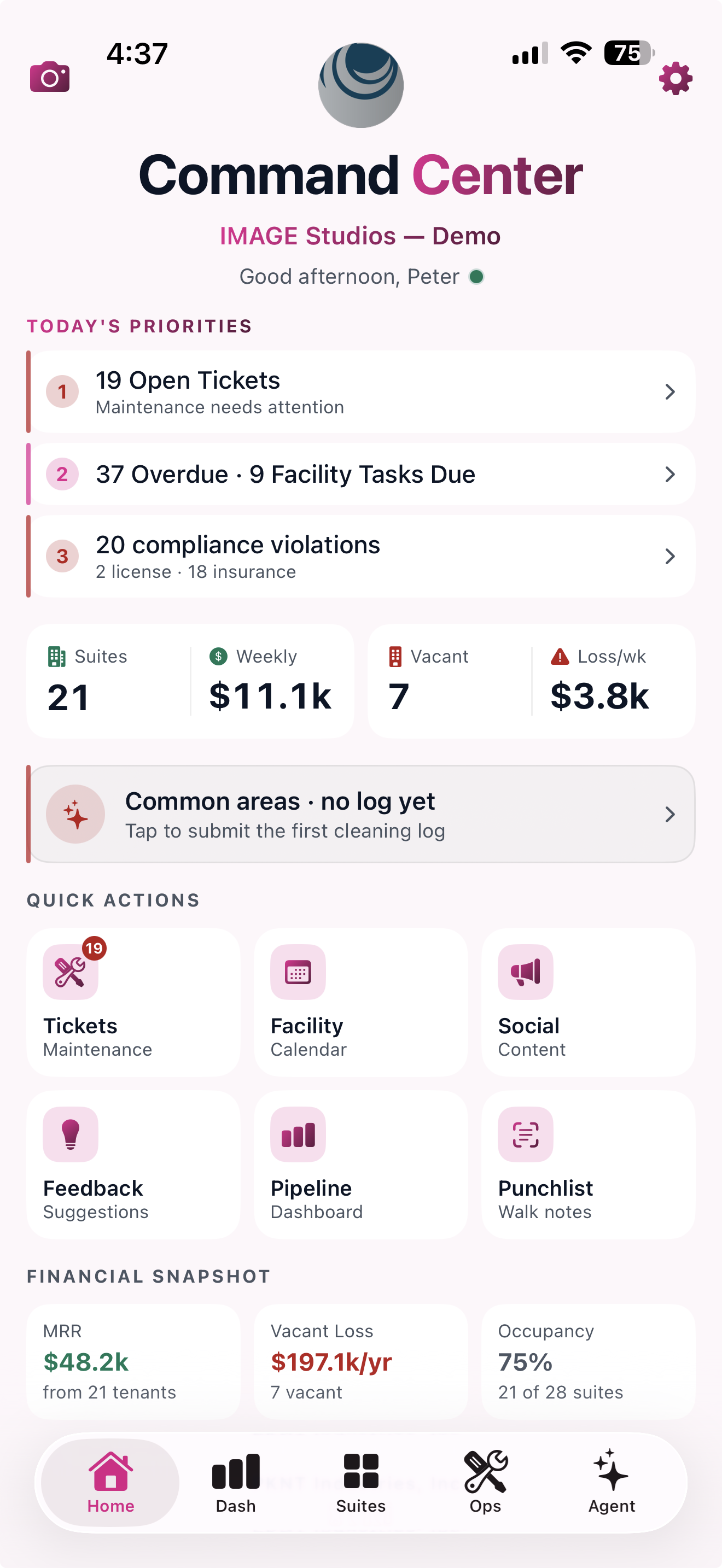
The operator-facing agent.
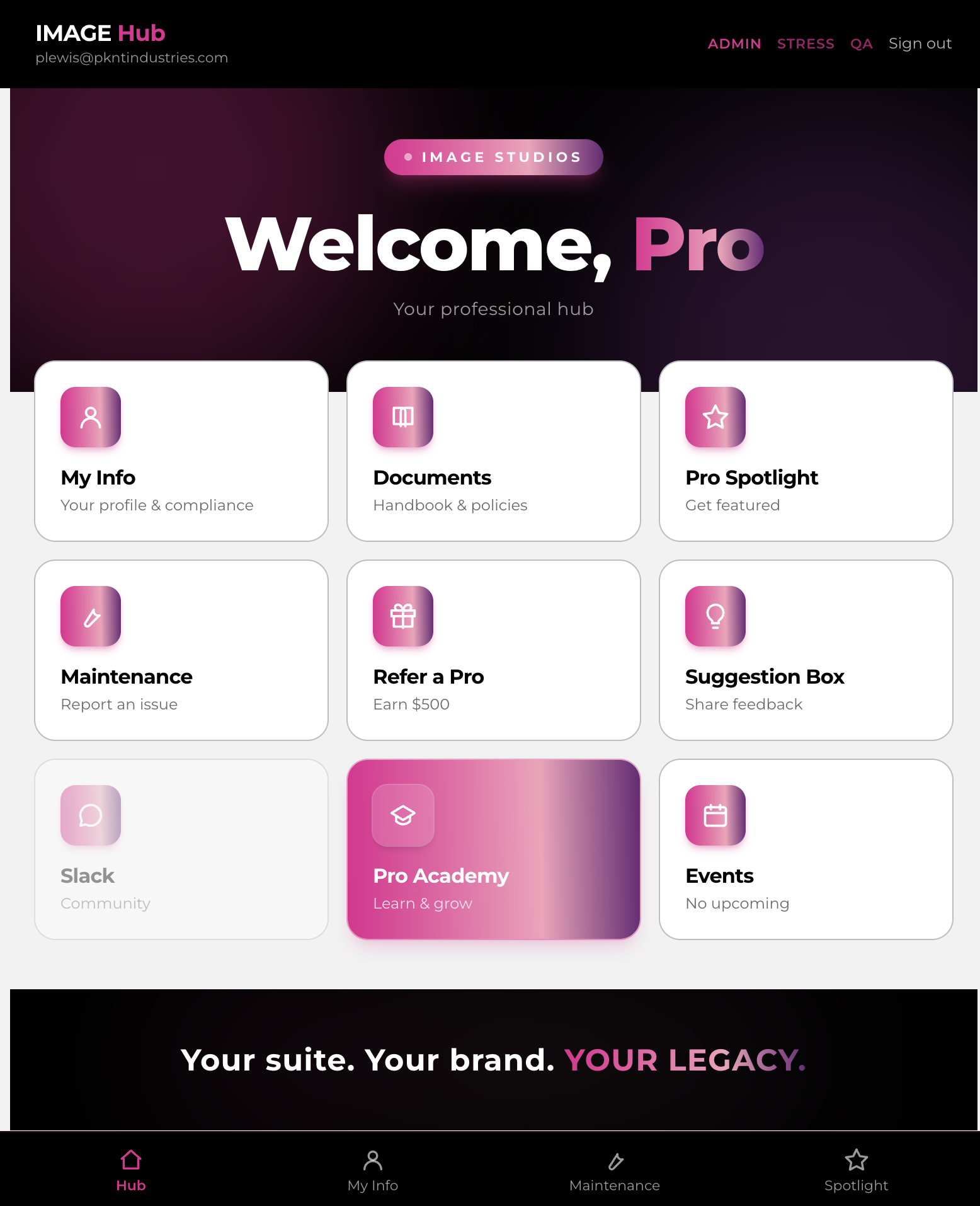
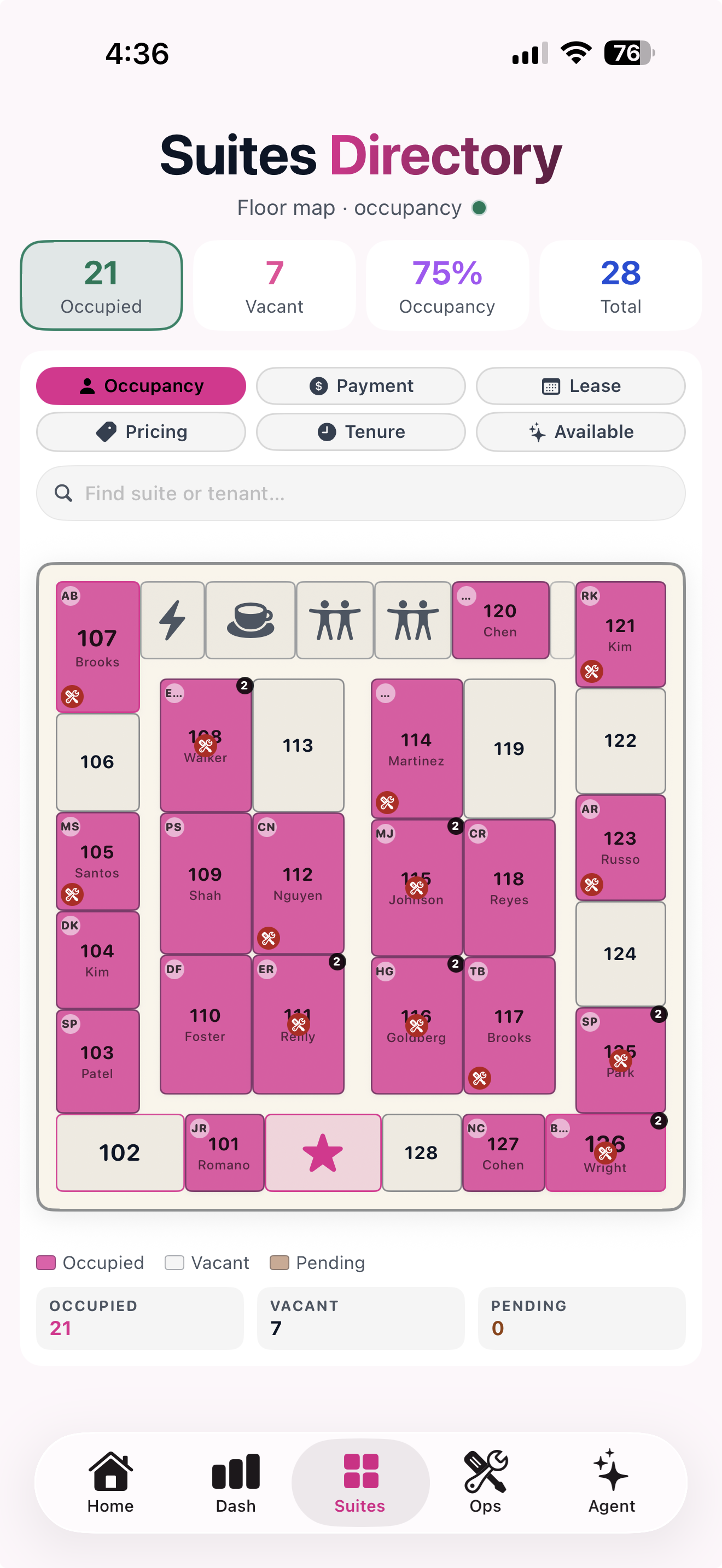
Existing Pros use the Pro Hub — a purpose-built portal where they submit maintenance requests, upload COIs, send referrals, and handle other operational tasks. Each submission captures structured data, routes to the right workflow, and lands in a single operational record across all thirty Pros. The owners see aggregate signal in real time rather than reactive triage across separate inboxes.
Two agents, two distinct roles. The customer-facing agent handles every prospect conversation — initial inquiries, tour bookings, follow-up questions — with the owners able to see and intervene in any conversation in real time. The operator-facing agent runs the operational backend: pulling signal across the location, surfacing patterns, flagging exceptions, executing routine workflows. Critical actions across both — anything financial, anything contractual, anything involving compliance — pause for the owners' review before executing. Routine actions execute autonomously with full audit trails. The architecture works because each agent is built for a specific job, with governance tuned to what that job requires.
The deployed stack
Same core architecture Cadence Advisers deploys for every engagement. Configured for this location's specific needs.
The architecture is deliberately transparent. Every component is inspectable. Nothing is locked behind proprietary middleware. The location's data lives in a Supabase instance the owner controls. The same architecture pattern, configured differently, is what Cadence Advisers deploys for every other client engagement.
From bottlenecked to scalable.
Inbound coverage went from business hours to 24/7.
Prospect inquiries that previously waited for the next business day are now engaged within seconds, at any hour. Tour scheduling happens autonomously. The location's responsiveness pattern shifted from "we'll get back to you" to "let's get you on the calendar this week."
The owner stopped being the operating bottleneck.
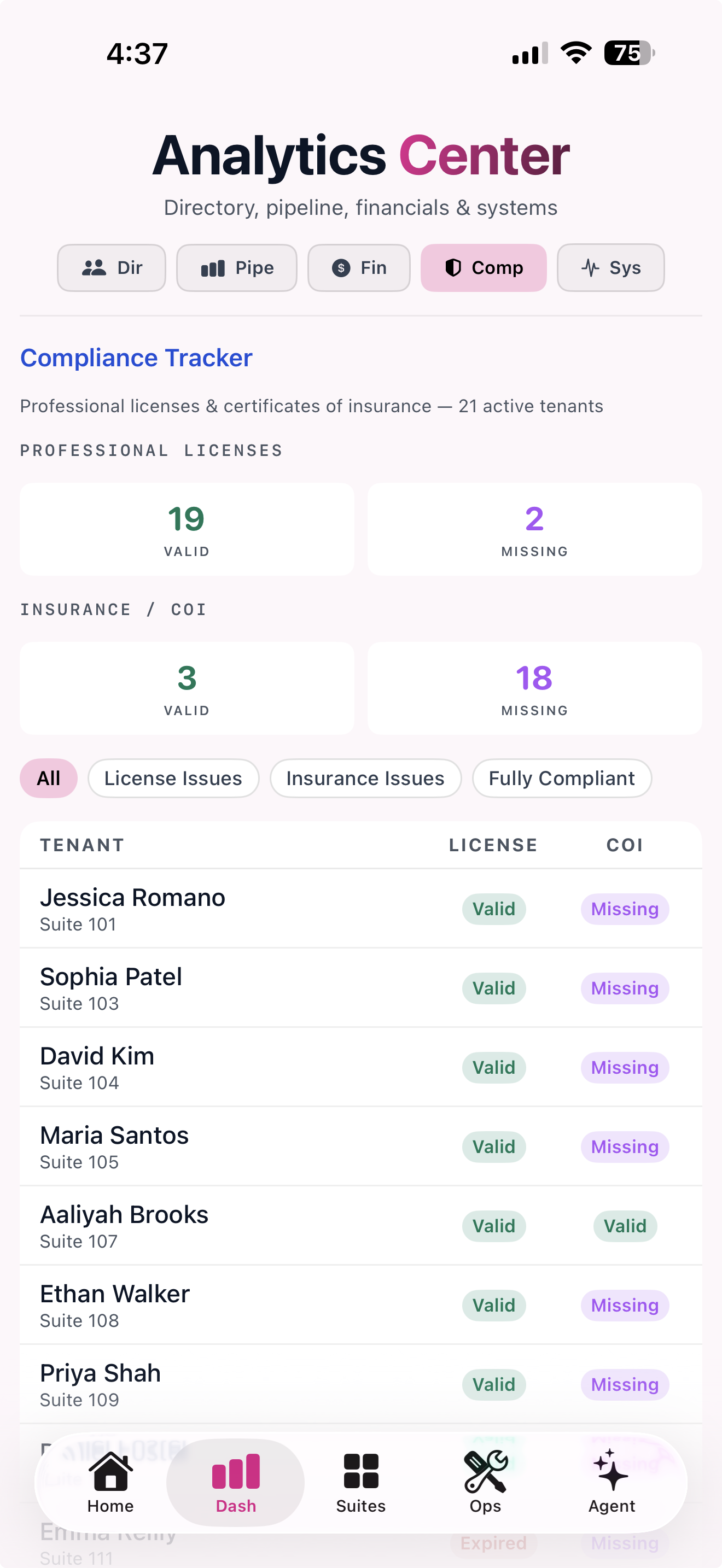
Routine operational requests from existing Pros — maintenance, compliance uploads, referrals — now flow through structured systems rather than landing in the owner's text messages and inbox. The owner reviews aggregate signal instead of reactive triage. The hours returned are real and were the point.
The operation became inspectable in real time.
Before deployment, the question "how is the location performing?" required pulling reports across three tools, manually reconciling against the calendar, and asking the owner what they remembered. After deployment, the same question is answered by a single dashboard surfacing leads, tours, conversions, Pro retention, compliance posture, and operational throughput. The decision quality on the location's monthly review meeting changed visibly.
Built for one location. Architecture supports multi-tenancy.
The deployment was built to run a single location well — that was the goal, and that's what it does. The architecture underneath was designed multi-tenant from day one. The data model, the agent configuration, and the integration surface all support additional locations as configuration changes rather than rebuilds.
The pattern, not the location.
The specifics of this engagement — beauty and wellness, multi-tenant, thirty Pros — are particular to one location. The pattern is general. Most operating businesses face some version of the same structural problem: enterprise-grade complexity inside an operator-scale envelope, with off-the-shelf tools that don't fit and an owner whose time is the binding constraint.
The architecture deployed at this location wasn't custom. It was a configured instance of the core Cadence stack. The next deployment — in a different industry, with a different operational shape — runs on the same architecture, configured to that business's specifics. That repeatability is the difference between consulting that scales and consulting that doesn't.
The deployment
Could this be you?
If you're running a business where the operating cadence runs through you — where missed calls add up to lost revenue, where follow-up depends on what you remember to do, where customer touchpoints scatter across email, your phone, a notebook, and three different tools that don't talk to each other — the patterns above probably look familiar.
If your day-to-day looks like email triage in the morning, fielding calls and questions in the afternoon, then catching up on the operational backlog at night, the patterns above probably look familiar. If you're growing in revenue but your hours can't grow with it, and you can feel the ceiling — the patterns above probably look familiar.
The work below isn't unique to multi-tenant locations. It's what happens when an operating model that worked at one scale needs to work at the next one, without the operator burning out to bridge the gap.
The architecture deployed here is the same architecture Cadence Advisers deploys for every engagement. The mechanics differ per industry. The outcome — operational discipline that doesn't require the owner's vigilance to function — is the same.
See whether your business is leaking what this one was.
The Cadence Diagnostic takes five minutes. By the end, you'll know where your business is out of rhythm and what the patterns suggest. No call required.